Home › Florida › Restaurant grease trap rules and manifests, Florida
Restaurant grease trap rules and manifests, Florida
- Pick what you need and give your kitchen's ZIP code.
- Each service goes to the number of local companies you choose, from one to five. We check licenses where the law requires one and email you their names.
- You talk with them and decide. You hire and pay the company directly.
Facts checked 2026-11-15.
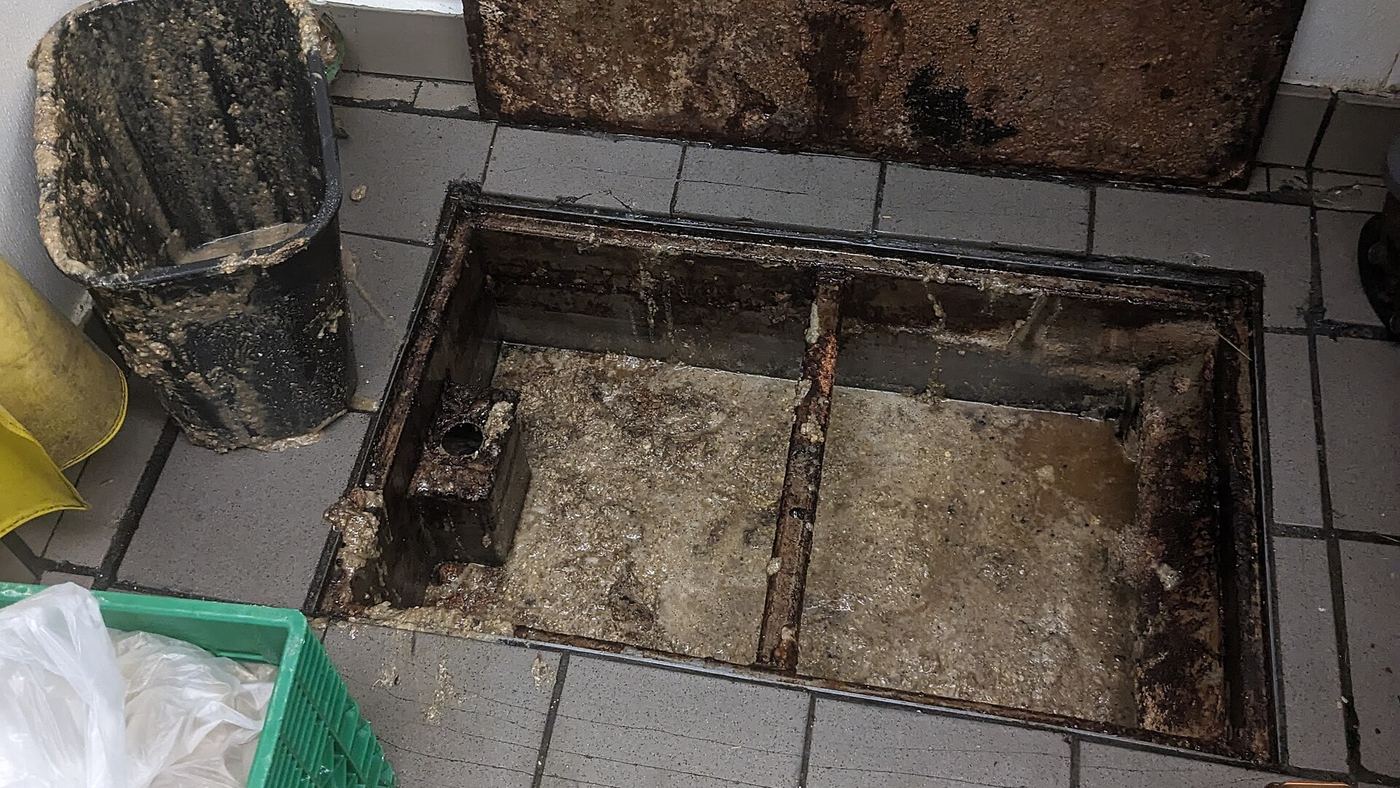

Pumping a Florida restaurant's grease trap is work for a licensed grease hauler, or for a self-cleaner. Each job produces a signed manifest, and the restaurant keeps its copy for a year. The state writes the paperwork and the penalties, while the local utility or county writes the pumping schedule, which may be tighter than the state's. Commercial Kitchen 101 passes requests to haulers and does not pump anything.
The state's part
The statute is section 403.0741 of the Florida Statutes. The Florida Department of Environmental Protection (FDEP) administers it through Chapter 62-705 of the Florida Administrative Code, effective December 7, 2025.
The statute and FDEP split the duties this way:
- Haulers. Only licensed grease haulers and self-cleaners may remove and transport grease waste.
- Restaurants. The law calls a kitchen like yours an "originator". You arrange regular trap cleaning, make sure the hauler provides a service manifest, and keep a signed copy.
- Self-cleaners. These are originators with a trap of 55 gallons or less who remove and haul their own waste. They follow the hauler rules apart from the license.
A new hauler applies for the license 30 days before starting, and existing haulers had until June 5, 2026. Renewal is due March 1 each year, with expiry on April 1.
The waste must go to a disposal facility. A hauler may not return grease waste or graywater to your trap. Disposal facilities not yet permitted by FDEP have until December 7, 2026 to apply.
FDEP's grease waste office is reachable at 850-245-8705 or [email protected].
The manifest, step by step
Each job gets one. Under the statute:
- If the work happens while you are open, you and the hauler sign. If you are closed, the hauler leaves a signed copy.
- The disposal facility signs as well.
- Within 30 days of disposal, the hauler sends a signed copy to you, the county and the city where the restaurant sits.
- You and the hauler keep a signed copy on site for one year.
An inspector may look for a hauler contract and a record that the trap was cleaned. Ask for the manifest after every visit, and call the hauler if it does not come.
A local company can take it from here. One form, free for restaurants.
Get connectedPenalties
The statute sets these amounts:
| Violation | Penalty |
|---|---|
| Manifest not provided or not kept | Up to $100 for each failure |
| Failure to clean a trap | Up to $250 for each failure |
| Unlawful disposal of grease waste | At least $2,500 |
| Second or later unlawful disposal | At least $5,000 |
| License suspension or revocation | At least 30 days suspension, or at least 12 months revocation |
Pumping frequency is local
No statewide pumping interval turned up in the state law. Local governments set one, mostly through the utility that receives your wastewater, and it changes from place to place. The utility or county can tell you the rule for your address. Guides for some counties follow:
Local governments may pass ordinances stricter or broader than the state rules. Small and fiscally constrained counties can opt out of parts of the state section, which means a local rule could be the one that governs your site.
Plumbing code requirements
The Florida Building Code, Plumbing, calls for a grease interceptor or an automatic grease removal device on fixtures that send grease-laden waste down the drain:
- Pot sinks and prerinse sinks.
- Soup kettles and wok stations.
- Floor drains or sinks receiving kettle drainage.
- Automatic hood wash units.
- Dishwashers with no prerinse sink.
A food waste disposer may not drain into a grease interceptor. Additives are restricted: systems that feed emulsifiers, chemicals or enzymes to the interceptor are prohibited, and only microbial additives the maker allows are accepted. Sizing comes from a code table based on flow. A separate exception covers an interceptor sized under the septic rules in Rule 64E-6 and placed outside the building.
A new kitchen has these items reviewed during plan review and permitting. The opening a restaurant guide walks through that process.
Fryer oil bins are a different matter
By the statute's wording, "interceptor or trap" excludes receptacles built specifically to collect used cooking oil or fats and bones. A fryer oil bin therefore stays outside the grease waste rules, as the used cooking oil guide explains.
Tell the form when the trap is due, and one local grease hauler receives the request.
Questions
Who may pump a grease trap at a Florida restaurant?
Either a licensed grease hauler or a self-cleaner with a trap of 55 gallons or less. FDEP's grease waste program page describes both categories in detail.
How long do grease trap manifests have to be kept?
The restaurant and the hauler each keep a signed copy of the manifest on site for one year. Ask for yours after each pump-out.
What sets the pumping schedule for a grease trap?
The state law gives no interval, so the local utility or county decides, and the answer varies. The utility that takes your wastewater is the right office to ask.
How large is the penalty for a missing manifest?
Up to $100 for each failure under the statute. Failing to clean a trap carries a separate penalty of up to $250 for each failure.