Home › Georgia › Georgia restaurant equipment rules and Georgia Power rebates
Georgia restaurant equipment rules and Georgia Power rebates
- Pick what you need and give your kitchen's ZIP code.
- Each service goes to the number of local companies you choose, from one to five. We check licenses where the law requires one and email you their names.
- You talk with them and decide. You hire and pay the company directly.
Facts checked 2026-11-15.
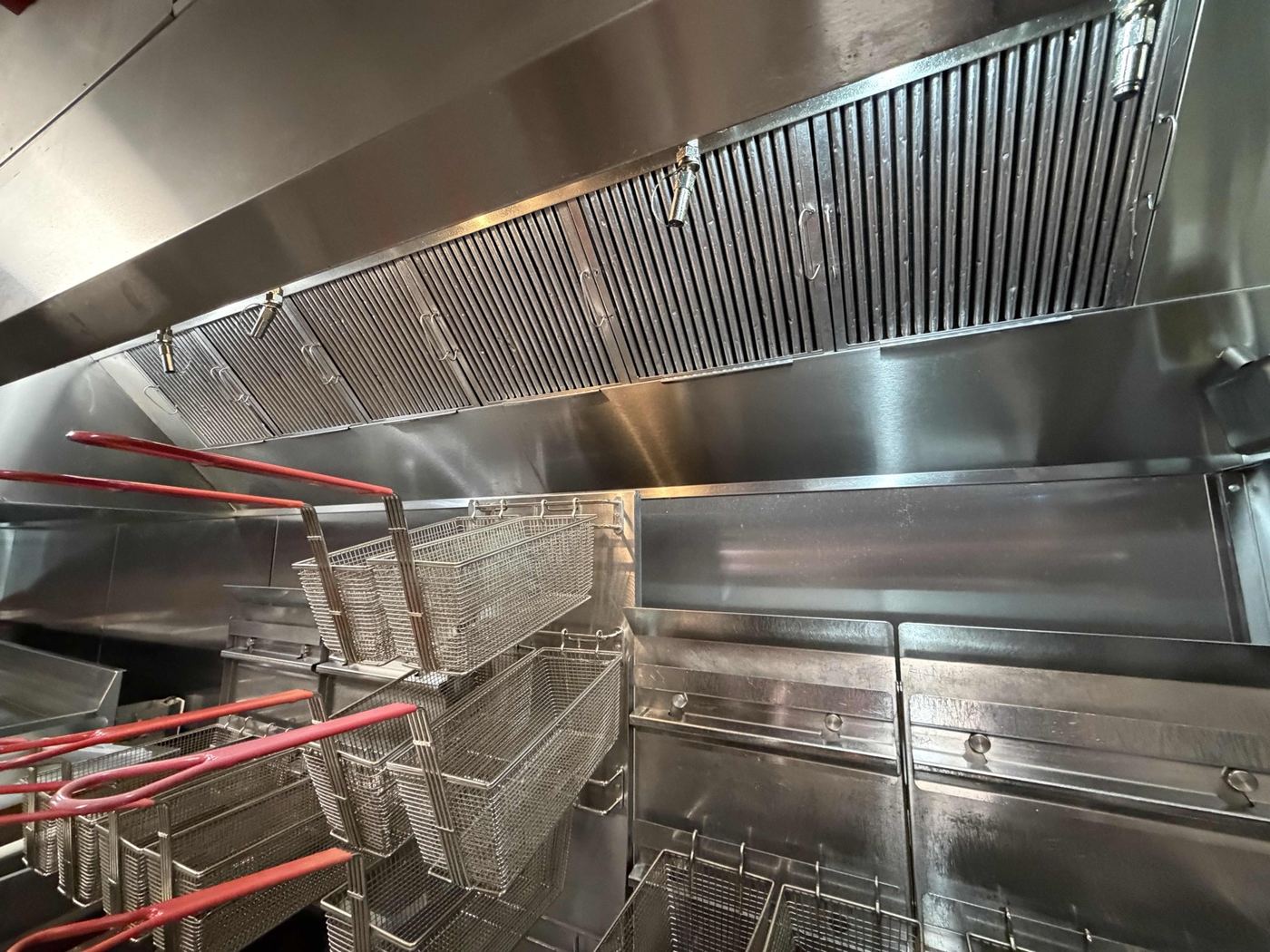
Two parts of Georgia's food service rules reach the gear and the groceries in a restaurant. Both live in Chapter 511-6-1 of the Department of Public Health (DPH) rules, and the county health office enforces them. Fixed equipment must be commercial grade, supplies must come from lawful sources, and the plan review packet lists each fixed unit by type and model. A utility rebate can offset the price of a few items.
What commercial grade means here
Rule 511-6-1-.05 requires commercial-grade equipment. Design can follow the standards of ANSI-accredited certification programs, and NSF and UL are the examples the rule gives. A unit certified or classified for sanitation by an accredited program under a recognized American National Standard counts as meeting the design standards, as long as you use it the way it was meant to be used.
Start with the certification mark on the nameplate. Ask the dealer for proof on every unit, and keep the spec sheets together in one folder, because plan review asks for make and model.
How equipment shows up in plan review
A new or heavily remodeled kitchen goes to the county health authority for review before construction. The packet carries:
- the menu you plan to serve
- a floor plan with the equipment layout
- mechanical plans
- construction materials and a finish schedule
- type and model for each fixed unit
- the daily service volume you expect
Submit it at least 14 business days ahead. The reviewer checks it against DPH's Food Service Establishment Manual for Design, Installation and Construction. Changing a unit after approval means asking the health office first.
Rule 511-6-1-.10 has the authority make one or more construction inspections. The permit comes after a preoperational inspection confirms the work matches what was approved, so the equipment on site should match the equipment on the plans. The opening a restaurant guide shows where this step sits among the other permits.
A local company can take it from here. One form, free for restaurants.
Get connectedWhere other codes reach your equipment
Fire, hood and drain rules touch some appliances too.
- Hoods and exhaust. Cooking that gives off grease-laden vapor needs a hood overhead. The hoods and exhaust guide has the codes.
- Fire suppression. The suppression system covers the hood, the duct and the appliances below, and a licensed firm services it. The fire suppression guide explains the licensing.
- Drains and traps. Rule 511-6-1-.06 covers drainage in a food service kitchen. The grease trap guide goes further.
Before sliding a fryer or range to a new spot under the hood, call the licensed firm that services your suppression system.
Georgia Power rebates for kitchen gear
Georgia Power's commercial rebate page lists two items that apply to kitchens:
- Sensor-controlled high-efficiency ventilation hoods: $500 per horsepower.
- ENERGY STAR commercial dishwashers: $350 each, with low-temperature units left out.
Each program has its own terms. Read them before you place an order.
Food sources
Rule 511-6-1-.04 says food must come from a source that complies with the law, and food prepared in a private home cannot be used or offered. Labels on packaged food have to meet the law's requirements.
In practice, buy from suppliers who can show they operate lawfully, and keep every invoice. During an inspection, the county health office can tell you what it expects to see.
Georgia's restaurant count
The Bureau of Labor Statistics counted 22,034 private eating places in Georgia in 2025. In 2019 the count was 17,690, so the state gained 24.6 percent. Fulton County had 3,414 of them and Gwinnett County had 2,265. A market that size sees a steady flow of replacement and reconfiguration work.
A buying checklist
- Collect the certification for every fixed unit before purchase.
- Write down make and model for each one, since plan review needs them.
- Note how each unit sits against the hood, the floor drain and the suppression nozzles.
- Ask the utility about rebates before the order goes out.
- File receipts, spec sheets and invoices together.
Choose kitchen equipment or food supply on the form with a Georgia ZIP, and the request goes to the number of Georgia sellers you pick (one to five).
Questions
Is commercial-grade equipment required in a Georgia restaurant?
Yes, under Rule 511-6-1-.05. Certification from an ANSI-accredited program, with NSF and UL named as examples, is accepted as meeting the design standards.
What equipment details does plan review need?
The type and model of each fixed unit, listed with the floor plan, the mechanical plans and the menu in the review packet.
Is food from a home kitchen allowed in a restaurant?
No. Rule 511-6-1-.04 bars food prepared in a private home from being used or offered.
Which kitchen equipment does Georgia Power give rebates on?
Its commercial page lists $500 per horsepower for sensor-controlled high-efficiency hoods and $350 for each ENERGY STAR dishwasher. Eligibility terms vary by program.
Sources
- Georgia Rule 511-6-1-.05, equipment and facilities
- Georgia Rule 511-6-1-.04, food sources
- Georgia Rule 511-6-1-.06, food service drainage
- Georgia Rule 511-6-1-.02, plan review
- Georgia Rule 511-6-1-.10, inspections
- DPH food service page
- Georgia Power commercial rebates and incentives
- BLS QCEW restaurants, 2025
- BLS QCEW restaurants, 2019